by tmoffett | Nov 2, 2010 | Color, Composition, Landscape, Photographic Philosophy, Ramblings
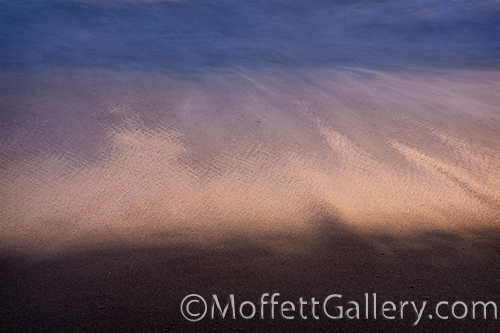
Warming Trends
I grew up, photographically speaking, on black and white. Numerous hours were spent in the darkroom honing my craft. I have become a better photographer due to my printing my own work. The darkroom hours helped me to develop my vision. Not only did I search for images while with my camera, but I spent many hours with the enlarger searching my images for the real photographs. I wish all new photographers could have those experiences. They changed the way that I view the world… in a good way.
I began photographing in color only after starting to photograph digitally. I still use my black and white mentality when working in the field, but often when I return to my digital darkroom (office and computer) I find the color to be a very important part of the images. So I started leaving the color in. It has been a fun and rewarding journey that has led me to explore avenues that I think I may not have tried before. I now see more than tones, I see the warm and cool hues that work together with the tones in an image to create mood and feeling. My life has been enhanced through the use of color.
My use of color has led me in recent months to explore abstract color photography as a means of expression. I guess that should not surprise me as I have always loved abstract art. I love the work of Piet Mondrian as well as that of Jackson Pollock. In my photographs I see more than just abstract design, I see feelings and relationships. I see warmth as the sun breaks through the clouds and and warms the sand as the cool water recedes. The water and sand mix and blend along the shoreline, just as humans mix and blend their lives throughout the days and years of their existence. There is meaning in everything, we must just search to find it. My Shorelines and Horizons series of photographs have been just that, an outward expression of innermost feelings and passions. They have become more than just photographs, they are pieces of me.
by tmoffett | Nov 1, 2010 | Color, Landscape, Photographic Philosophy
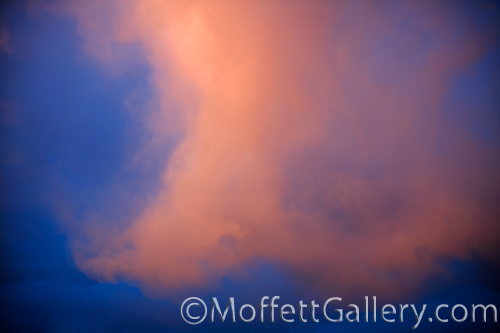
Clouds
Last week I discussed photographing ordinary subjects. I love what Edward Weston had to say about the subject. “Anything that excites me for any reason, I will photograph; not searching for unusual subject matter, but making the commonplace unusual.” He also said, “I see no reason for recording the obvious.” The obvious is a snapshot, the unusual, a photograph. Recognizing the difference is the beginning of an incredible journey!
So often the unusual is right in our own backyard. It is at our fingertips and we are not observant enough to recognize it. We want to go somewhere exotic, thinking that we will find something more exciting there, when, if we would really explore where we are now we would find exciting images all around just waiting for us. The more we learn about our own surroundings and learn to become aware and observant, the more success we will find in our photography. It isn’t about where we go or with what piece of equipment we use, it is about how and what we see. Because I have learned to see I believe that my life is richer. I see things that are beautiful and inspiring when others complain about where we are. I only hope that sharing my vision will help another to see as I see, a world full of beauty, everywhere, all the time. It is there, we must just open our vision to let it in.
by tmoffett | Oct 29, 2010 | Landscape, Ramblings, Random images
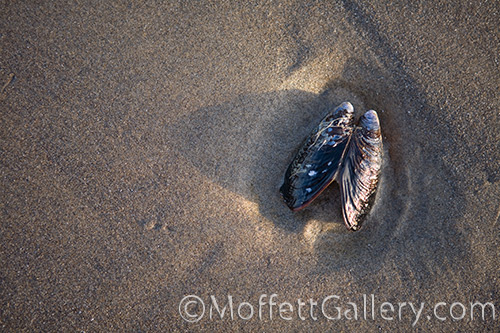
Mussel in the Sand
Anything can be photographed! We have been talking about vision in my advanced photo classes, and looking at images of ordinary subjects photographed in extraordinary ways. It all boils down to vision, what we see and how we present it in a photograph. Is it nicely composed and flawlessly lit to enhance our vision? Does it create a feeling or a mood?
Some of my favorite photographers photographed common things. Edward Weston photographed peppers and Paul Caponigro shot sunflowers, both in incredible ways. It really doesn’t matter where we reside and work, it is about how we see. Learning to see in moving ways is an art. Through practice we can develop a personal vision that allows us to share a piece of ourselves to the world. I find it very refreshing as well that my vision evolves and changes with time and experience. As I live life, those experiences shape and mold my vision. I see old things in new ways and new things in old ways. When photographing from the heart, I am never disappointed. It is always new and exciting.
I love life!
I love photography!
by tmoffett | Oct 28, 2010 | Color, Composition, Landscape, Ramblings
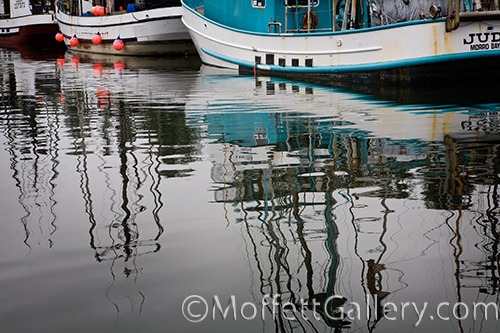
Reflections
As hard as it is to do sometimes, it is good to get out of your comfort zone. I teach this all the time to my students as I assign them to photograph things that are not their forte. Doing it out of choice is harder to do, though. One rainy afternoon I found myself at the marina in Newport and decided to try something new. I have always admired photographers who shoot in locations like this and work wonders with their images. This is not where I choose to do most of my work. I fail find the organization in this kind of chaos. I am about simplicity.
I made the choice to find and photograph something that day. I had no tripod with me at the time, which made matters worse. I am always on a tripod. I didn’t have any idea what I might be able to find, but I went looking. I was way out of my comfort zone.
It was a great experience. I learned that even though I don’t choose to photograph this way very often, I can do it. I began to see things that I wouldn’t normally see. I began isolating the reflections in the water from the bouts. The scenes became abstract and I saw line, color, shape and form. I learned that beauty is everywhere, we just need to open our eyes. It is about vision.It is about the love of photography.
by tmoffett | Oct 27, 2010 | Color, Landscape, Ramblings
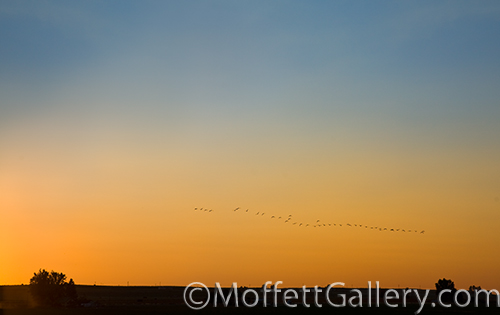
Twilight
October is my favorite month to photograph. The air is cool and refreshing. The colors are great and the light is wonderful. There is a good mixture of sunny days and stormy weather… I love both! Above all, though, the sunsets are usually great.
One particular evening as I was out at the lake, I turned west just in time to see this line of birds crossing through the golden light after the sun had dropped below the horizon. I quickly turned the camera and shot. I didn’t have time to think, I just did it. I was glad to have had enough experience to know where my camera settings needed to be because I only got one frame shot and the birds were gone. It is so important to understand the technical aspects of the camera so that you don’t miss out on these kind of opportunities.
by tmoffett | Oct 26, 2010 | Color, Landscape
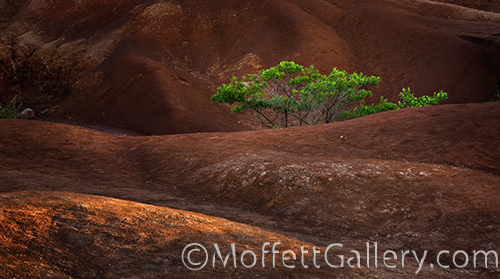
Light is what I look for. If I find great light, I will always find a subject. In this case a small stand of trees in the middle of the red rock hillside on the island of Kauai. I noticed this on the way up to Waimea Canyon, but on the way back down at sunset the light was just right. It skims across the tree as well as the ridges of the rolling hills and creates depth in the image otherwise unattainable. The light dances across the scene creating a liveliness that was not there just a few hours earlier. Timing is everything. A photographer must be patient if he is to succeed. It is a life of looking and waiting, then at just the right instant creating. It is a wonderful life!
by tmoffett | Oct 25, 2010 | Color, Composition, Landscape, Ramblings
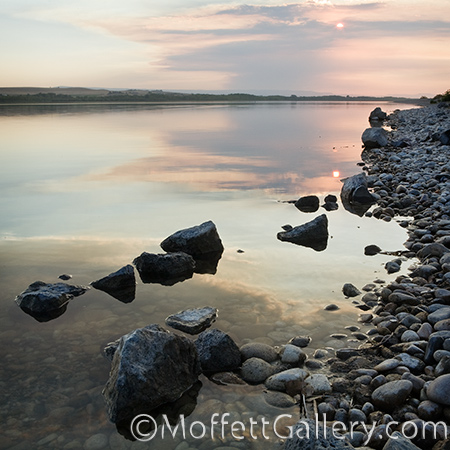
Sunset, Gotts Point
I used to shoot square images a lot. My wedding camera, back in the days of film, was square. I sometimes miss that Bronica. I liked the feel of it. I liked the format. It was refreshing because it was different. It was sometimes challenging to shoot interesting compositions because it was symmetrical. I got used to it and loved it. Now I shoot almost entirely digital. I have one format. Occasionally I still see square, though, and I shoot and crop. This is one such image.
While out at the lake earlier this month, I watched the sun setting and this pastel image appeared before my eyes. I set up my tripod and camera, and rotated from horizontal to vertical and back again. The image was not in the rectangle frame of my DSLR. It was most definitely square. The lines created by the rocks and the horizon leading left to right are strong. The placement of the sun in the upper right, perfect. This is the perfect composition to be photographed square. It has a strong vertical feel to it, yet it is perfectly square. My mind drifted back to my Bronica SQai. I could feel it in my hands as I squeezed the shutter. Even the color of the image is reminiscent of the color from Kodak VPS, my favorite color film that Kodak ever made. The pastel colors rendered warm and inviting. The contrast soft and smooth. This image reminds me a lot of my days shooting film. Those were good days.
by tmoffett | Oct 22, 2010 | Color, Landscape, Photographic Philosophy
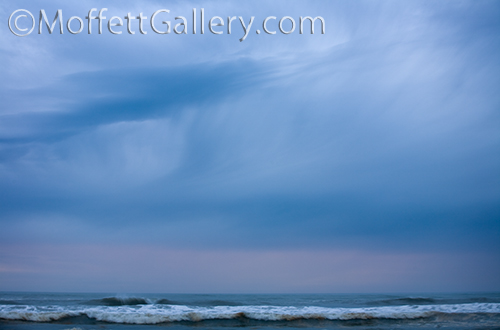
Stormy Sunset, Seaside Oregon
Simplicity in an image brings power. This is a hard concept for beginning photographers to grasp. In our complex lives it is hard to cut out the clutter in our minds and recognize the simple things that are so beautiful. This goes not only for image making, but for our lives as well. Because multitasking is normal, our minds have a difficult time slowing down, if even for a moment. While difficult to do, it has become a necessity for me. I take time to ponder and meditate, to not only look but truly see, not just touch but feel my environment. As I take time to absorb my surroundings I am better able to reduce a scene, visually, to its foundation which is where its beauty lies. Only then am I able to capture it simply and emotionally.
My process when photographing is not fast. It is slow and thoughtful. Often I will set up my tripod and camera and then look and think and ponder. “What drew me into the scene?” “Why did I set up my camera here?” These and numerous other questions go through my mind as I determine what it is that the image is to be about. Then I check the viewfinder and check it again, set exposure settings and check the viewfinder again. Eventually I press the shutter. The entire process is an experience. The whole experience becomes the photograph, an image that hopefully can be felt by the viewer, but if not, it is experienced by me and I am satisfied.
by tmoffett | Oct 20, 2010 | Black and White, Composition, Landscape
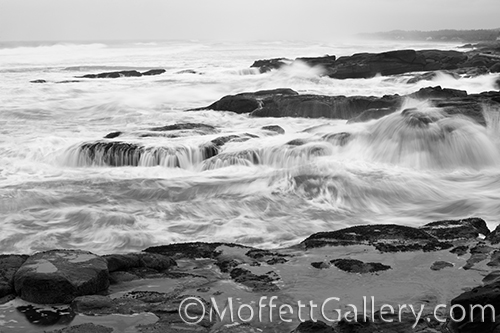
Oregon Shoreline
This image from the Shorelines Portfolio shows a stark contrast from the calm image that I posted yesterday. Using a faster shutter speed, I was able to maintain a greater feeling of turbulence in the ocean as the waves crash into the rock outcroppings along the shore. When photographing moving water, shutter speed selection is critical. Use a very slow shutter speed and all of the motion is smoothed out, sometimes to the extent of being mushy and washed out, lacking detail. Too fast of a shutter speed and every drop of water is frozen in space. The in between shutter speeds are what I usually work with, getting a perfect blend of detail and movement.
I had been to this location before at high tide, so arriving in the dark just prior to low tide this time, I had no idea what I might find. I was not disappointed. As the sun crept over the horizon, I found many tide pools filled with sea stars and other ocean life. I also found this composition waiting to be photographed. I love the still water reflecting the overcast sky on the dark rock in the foreground with the turbulence of a raging sea behind it. The image, to me, is all about turbulence in life and finding peace as we rise above it. Hindsight is 20/20. When rising above the trial, we look back and can see the beauty of where we have passed.
by tmoffett | Oct 19, 2010 | Black and White, Composition, Landscape
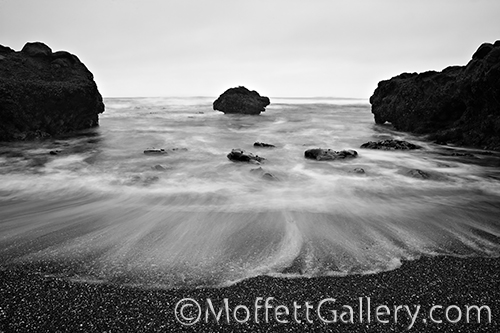
Floating Rock, Yachats, Oregon
Dead Center. A colleague of mine was given this nickname in college because she loved symmetrical compositions. The main subject always in dead center. I dedicate this image to her.
I am always teaching and preaching the Rule of Thirds and the Golden Mean. If my students learn nothing else about composition, they better know understand those. So why do I occasionally not use them? Because it works! When deviating from a tried and true technique, such as the Rule of Thirds, there better be a reason for it. In this image, there is. The outcropping rock on each side of center appear to point to the center rock and then the water coming forward breaks up the composition enough to add interest and direction. The edge of the water in the foreground give a defining edge that completes a circular composition, giving the viewers eye a place to go, preventing it from stagnating in the center of the image as so many dead center compositions do.
I love off center compositions that maintain a visual balance, however it is good to break it up once in a while and do something different. Just make sure there is a reason for it and that it works visually. Like I tell my students, “Rules were meant to be broken, but you better have a reason for it!”

Recent Comments