by tmoffett | Sep 6, 2010 | Color, Landscape, Photo tips, Photographic Philosophy
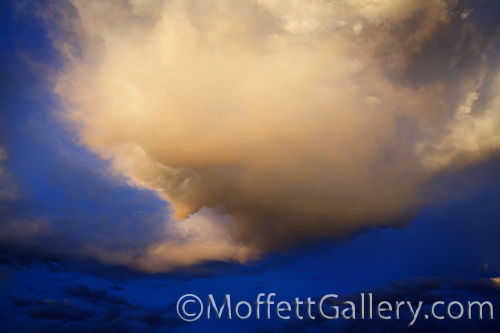
Cloud Formation
Remember the days as a kid spent laying on your back watching the clouds blow by? Those were the days! Not a worry in the world. Just kick back and enjoy the summer. Sometimes I wish I could go back to those days. And then I think again. I like where I am and where I am headed, so I guess I wouldn’t change a thing. Life is good.
Photography is my outlet. I say what I feel through my images. I have learned to manipulate the camera to capture feelings along with the image, or should I say embed in the image. To some viewers, it may just be a picture, but to others it exudes feeling and meaning. This happens because I shoot from the heart. I don’t think when I photograph, I feel. I have tried to make technique a part of my nature so I do not have to think about it when I photograph. It comes naturally. I focus now on interpretation of a scene. I find that if I think too much, then I end up with boring images that have no meaning, to me or anyone else.
Learning technique takes time. It takes practice. I remember taking a Zone System class in college. Everyone seemed to hate it because it was too technical. It did not allow for the art to come through. It was difficult and grueling. We photographed towels and analyzed the density of the film and prints. It was boring. I stuck to it and learned. It was all about technique. Looking back, I don’t think that I learned more in any other class or workshop that I have taken since. That class is where technique became second nature for me. It allowed the art within me to be released. As a landscape photographer that is critical if I want my images to have meaning.
I guess what I am saying is this:
Learn the technique.
Pay the price (time and practice).
Enjoy the result.
by tmoffett | Sep 3, 2010 | Color, Composition, Landscape, Photographic Philosophy
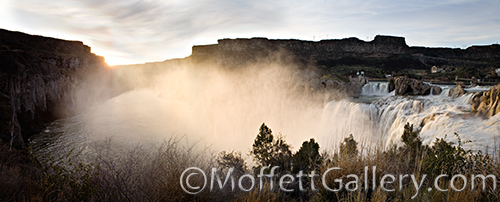
Shoshone Falls
I like using different formats for my photographs. I know some photographers believe that one should always shoot “full frame,” but not me. Why should I let a camera manufacturer dictate the aspect ratio that my photographs should be? I feel that the photographer should be in control of the entire process, including final cropping. When a particular image would be best as a square, then make it square, if rectangle is best, then do that, and sometimes a panoramic format work best. I have shot with a 4×5 view camera quite a bit, but I really don’t like that format full frame. I often will crop the top and bottom 3/4 inch off to make it closer to 3×5. I find that a much more appealing format. I have been photographing that way off and on now for 25 years and I still like it.
One thing that I do believe in is to determine the crop before making the exposure. Previsualization is key. A great photographer will know at the time of exposure what he/she wants the finished piece to look like and knows how to get it. This applies not only to the cropping, but to the final look and feel of the image as well.
Digital photography has changed how I capture images, but it has not changed my vision much. I have had to learn new techniques, but only to the extent of enhancing my vision. The concept of previsualization is a hard one for many of my student to catch on to. With digital cameras offering instant feedback, the new philosophy is to shoot a thousand images and when then when editing, we are sure to find a good one. This thought process destroys the ability to make truly thoughtful art. It is not about creating meaningful images anymore, just pretty pictures. This way of thinking and creating is definitely not for me.
by tmoffett | Sep 2, 2010 | Color, Landscape, Photographic Philosophy
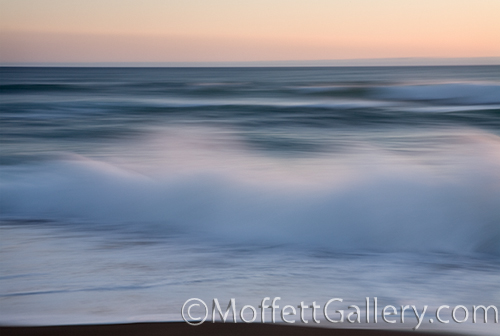
Horizon, Seaside, Oregon
Here is a sneak peek into a new portfolio that I am currently working on. Entitled Horizons, the images are all seascapes made in an abstract sort of way. The power, beauty and motion of the sea are somewhat overshadowed by the horizon line, the only truly sharp area of the photographs.
This series started as a fun diversion from my more traditional landscape photography work. As I photographed more and more, I developed a love for the feeling portrayed in these images. Now, every chance I get to be at the ocean I am there, camera in hand. I have always loved capturing motion with still images, but that love has developed into a real passion while working on this portfolio. There is something very captivating about the ocean. Watching the movement and power of the waves is mesmerizing. I could sit and watch this motion for hours and never tire of it.
The effects of motion in this series is all captured in camera. none of the effects are made in post production. Slight tonal adjustments are the only things accomplished after capture. I am a firm believer in using the camera to make photographs, not Photoshop. To accomplish this task successfully, one must master the technical aspects of the camera, an art that is becoming lost in today’s world.
by tmoffett | Aug 30, 2010 | Black and White, Photographic Philosophy, Ramblings
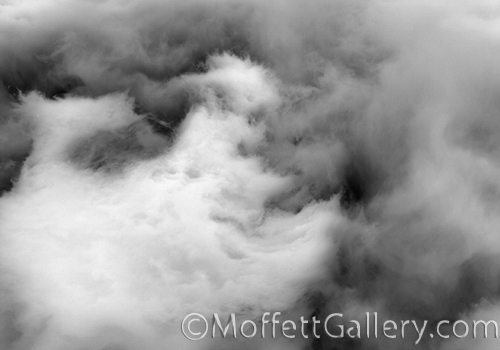
Clouds #16
In landscape photography, clouds can be a very big asset. Clouds affect the background area of the image, they affect light quality, and sometimes they can be the entire subject of the image. I love chasing storms in search of the perfect clouds. I have learned to create images with or without them, but my preference is always to have them.
One particular summer afternoon I didn’t even have to go in search of them, they came to me! I notice from inside the house that the light was changing, and so I went outside to check it out and as I looked up I saw some of the most incredible cloud formations I had ever seen. The clouds became my subject that afternoon. I put on my 200mm lens and began photographing smaller sections of the cloud formations instead of using the usual wide angle lens to capture the whole sky. Everything in the viewfinder became abstract. Some images, like the one above appeared to be inverted as well as having the appearance of having been shot from above. I had a great time exploring nature in my front yard that afternoon. It is a wonderful experience to create images while right at home.
by tmoffett | Aug 29, 2010 | Color, Landscape, Photographic Philosophy
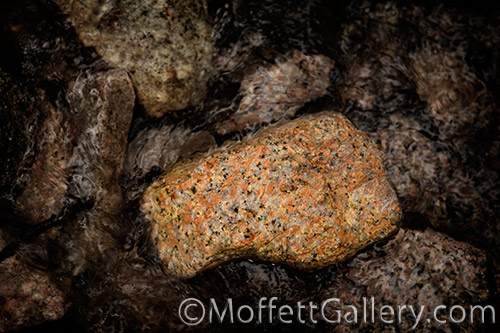
The Rock
There are photographs everywhere just waiting to be created. Many times we are too focused on the big picture that we fail to see the details, when the details can be just as interesting, or sometimes even more interesting than what we see. We must train ourselves to slow down and become observant of our surroundings.
One afternoon I went on a hike with a couple of my boys to Bridal Veil Falls. I had made this hike on several occasions previously and had walked over/through this particular stream and never thought anything of it. However, on this hike, I stopped to check out some wild berry bushes and while looking I happen to look down in the stream and noticed the interesting color of rocks beneath the surface of the crystal clear water. This one stone seemed to stand out from the rest, so I photographed it. It is a reminder to me that I must make a conscious effort to really explore my surroundings. Life is much more enjoyable this way, and I often find new subjects to photograph as a bonus!
by tmoffett | Aug 26, 2010 | Photo tips, Photographic Philosophy
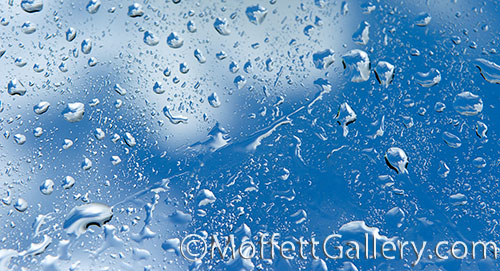
Wet Outside
“It’s cold outside.”
“It’s raining and I don’t want to get the camera wet”
“I didn’t have time.”
The world is filled with excuses. I teach photography to high school students and I hear excuses every day. I am amazed that I hear these same excuses occasionally from “Professional” photographers as well. This is one area that needs to be corrected if we are truly going to find success.
I have learned that changing an excuse into an opportunity is simply a change of mindset. When it is raining outside I find the opportunity to create images that I cannot get when it is dry and sunny. Protecting the camera is a simple thing. It can be done with a garbage bag! When it is cold and snowy, put on a coat and gloves! There are photographs to be made that those lazy photographers will never even see, except when they view yours!
In the photograph above, for instance, a thunderstorm caught me off guard and I retreated to the truck. While waiting for it to pass I continued searching for a photo opportunity. I found this just before the sun broke through at the end of the storm. I know it is not a masterpiece, but it was a great exercise in looking for images, and it made me aware that no matter where we are or what the weather is, there is always photos waiting to be created.
Be looking for opportunities at all times. I guarantee it will make a difference.

Recent Comments