by tmoffett | Oct 11, 2010 | Black and White, Composition, Landscape, Photographic Philosophy
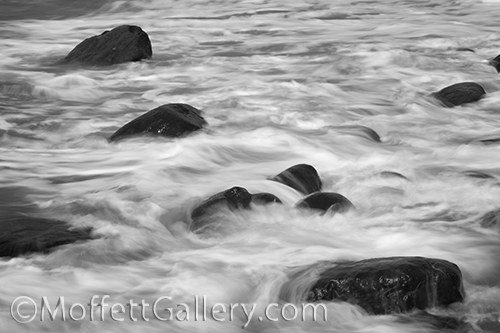
Rocky Shoreline, 408 Trail, Yachats, Oregon
Shorelines is a portfolio of photographs that I have been working on for about a year now. It is all about water and land interaction along shorelines. Both ocean and lake shorelines are included in the series. I spend a lot of time in the outdoors, not only photographing, but fishing and just enjoying nature. I have been intrigued with water and land interactions for a long time. I have noticed both erosion and new life along the lakes I have camped at. Along the ocean I see the changes that happen with rising and ebbing tides. The calm waters in a tide pool or the rough waters of a stormy sea. It seems that the waters of the deep have little change, but at the shoreline the change is constant.
I have visited the same locations multiple times and never found the same thing twice. Ona Beach along the Oregon Coast, for one, in June had some incredible rock formations covered in moss along the shore, but in October those rocks are completely covered with sand. This occurs due to the shifting sands throughout the year. The light on a clear summer day will create a totally different look and feel than I will find on a stormy fall evening.
When photographing along a shoreline, I like to keep a sense of stability by maintaining some element in crisp focus, while letting other area blur with the motion of the water. In this image, the rocks protruding from the water provide that stability to the image, while the fast moving waters create a sense of movement and flow. The busyness of a stormy sea in contrast to the stability of solid rock. I can read the story of my life in the photographs that I create, but instead of telling my story, I want you to see yours.
by tmoffett | Sep 29, 2010 | Color, Composition, Landscape, Photo tips
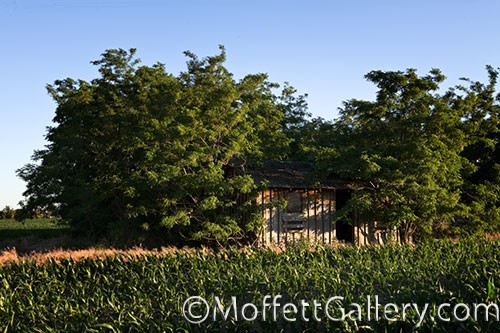
Abandoned, Canyon County, Idaho
Photography means writing with light. If we are going to have quality “writing” we must have quality light. I have had students ask “Why can’t I make photographs like yours?” I nearly always answer with, “You can” followed up with “What time of day did you shoot that one?” I already knew the answer, but needed to ask in order to make the point.
The quality of light changes throughout the day. On a clear day, the warmest and softest light is in the evening, just before the sun sets. Mornings at sunrise are good too. I love working in the evening, as I can watch the light get better and better right through the sunset, and then it changes to a cooler, but still a very soft, moody light. The soft, directional light that happens that last hour before sunset is very sweet. The texture in nature becomes very pronounced. The shadows are deep, yet not blocked up. The warm/cool relationship between highlights and shadows is also more pronounced. It makes for amazing images. Don’t get me wrong, you must still have a vision. The photograph doesn’t create itself, but when vision and light work together you can get some terrific results.
If we want to create images with feeling and power, we must be willing to work when the light is right, even if it is not convenient.
by tmoffett | Sep 23, 2010 | Black and White, Composition, Landscape, Photo tips
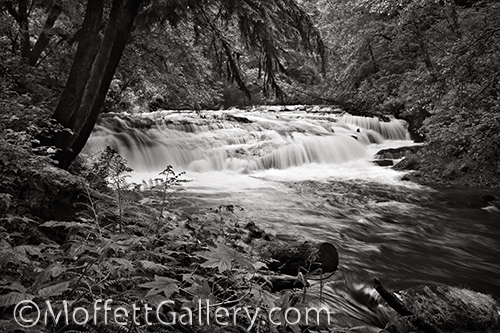
Knowles Creek
One of the most beautiful small rivers I have visited is Knowles Creek in western Oregon. One summer afternoon Christeena and I took a small hike along its banks, and along one section we walked there was nearly a mile of nonstop, staircase type waterfalls. There was nearly too much water to get nice photographs. When it comes to shooting waterfalls, I prefer just a little water as it tends to photograph better than a whole lot of water. When there is too much flow, the water just turns to a white, textureless streak. With less water a soft, ribbon like effect happens. It is much more interesting that way. You can almost feel the flow of the water.
There is just something about kicking back and relaxing on the banks of a river. The sound of the running water and the fresh air of the outdoors is so peaceful and nice. Even the occasional rainfall that came down didn’t disrupt the feeling in the air. I could hang out in the outdoors year round without a problem. It is my kind of life. Just me, my family and my camera. Wouldn’t that be nice!
by tmoffett | Sep 22, 2010 | Black and White, Composition, Landscape, Photographic Philosophy
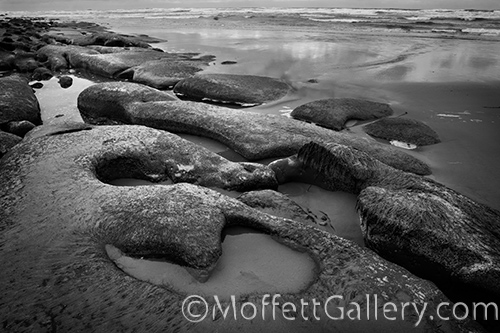
Ebb Tide, Ona Beach, Oregon
This past summer was very productive. I had many opportunities to photograph and not a lot of time to process the images. Here it is the middle of September and I am still working on files that were shot several months ago. I just processed this image last night, and as I was reviewing my files, wondered how I missed this on the first round of editing. The shapes, the reflections, the storm moving in, it all seems to work together.
The first time I went to Ona Beach I got all set up, camera on the tripod, composed and then came the downpour, before I even got off an exposure. I had never seen a storm move in so fast as that one did. So I went back the next day. It was incredible. The stones on the beach, carved by the water as it came and went with the tide, were dotted with pockets of water left by the receding tide, surrounded by mossy growth unlike anything I had ever seen before. It was really cool. The light was low and soft, as the sun was covered with light clouds. It had been raining but was starting to break up. I couldn’t have asked for a better day at the beach. And this beach, I could go back to over and over and never tire of it.
The calm after a storm as the clouds lighten and the sun begins to break through, the smell of fresh, clean air and the soft light, these are feelings that I like to show and have the viewer feel in my landscape photographs. If I feel them, I can create them. It is all about photographing from the heart. If I am constantly thinking about the technique to be used, then I will fail to capture a feeling or emotion. I must know the technical aspects of the process intuitively. It must be a part of me, then, and only then will I begin to create images with meaning. Many photographers think that it is all about technique, when really it is all about feeling. I must feel the image first, then I can create it.
by tmoffett | Sep 19, 2010 | Color, Composition, Landscape, Photo tips
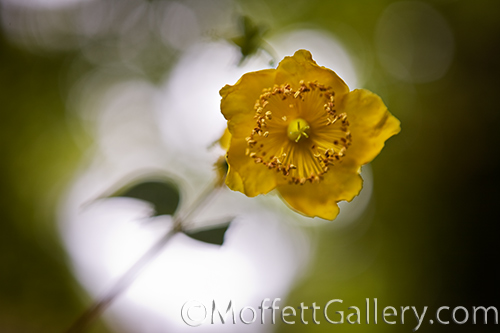
Framed by the light
When it comes to photographic composition, there is no rule greater than the Rule of Thirds. This rule of composition is not new. It stems from the Fibonacci Theory, also known as the Golden Mean, the Golden Ratio or the Fibonacci Spiral. It is a pattern in nature in which a spiral galaxy is laid out, the arc a hawk takes when diving at its prey and even a sunflower seed follows this patten when it grows. It is a pattern that we see everyday in nature, therefore it only makes sense that because we subconsciously are aware of it, our photographic compositions will be stronger if we apply this theory to them.
In a nutshell, the Rule of Thirds is a lazy mans Fibonacci Curve. It is not exact, but close. I think if we are aware of this theory and then compose our images from the heart, not from a grid, more often than not the image will line up with the Fibonacci curve. What the rule of thirds states is that if we divide the frame into thirds, both horizontally and vertically, the intersecting points are the strongest points in the composition. Our subject should then be placed at on of those points. The following is an illustration of the Rule of Thirds.
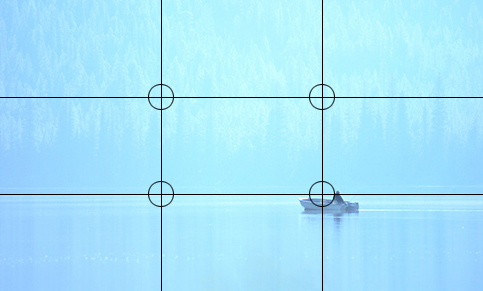
The intersecting points onthe grid are the strongest points to place the main subject.
This is the first theory that I discuss with my classes in their composition unit, as it can be applied to almost any photographic situation. This is the rule that we build on to make even better photographs throughout the year. As we apply line, framing and other compositional rules and concepts of design in our photography, we can still use the rule of thirds along with them to make our photographs even stronger.
by tmoffett | Sep 13, 2010 | Color, Composition, Landscape
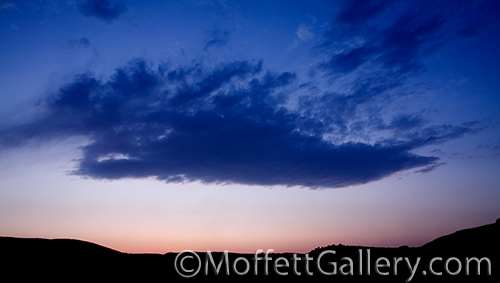
Sunset in the Owyhees
The last light of the evening is always my favorite. The light gets real moody and creates an almost surreal feeling in the images. The contrast is low, so detail is maintained in both shadows and highlights unlike anything that can be created during an earlier time of day. Colors also become saturated. I love how with careful attention to exposure I am left with little work to be done in Photoshop. The in camera image is nearly perfect.
Next to lighting and exposure, composition decisions are critical. Note how the cloud in this image mimics the shape of the mountain tops along the horizon. Cropping is done in camera to make sure that the horizon line does not split the composition in half. I really like moving the horizon down near the bottom, allowing for more sky and the drama of the sunset to become dominant. In this photograph, the warm color in the middle, sandwiched by the cool blues on top and bottom are what make the color scheme work. Dark tones, rich in detail fill the shadows and holding my attention as I search them for answers. Answers to what, I am not sure, but I keep looking none the less. It’s all a mystery.

Recent Comments