by tmoffett | Jun 3, 2010 | Black and White, Composition, Landscape, Photographic Philosophy
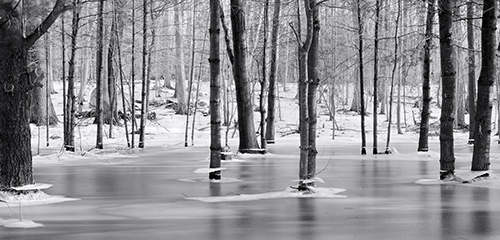
Frozen in Time
Years ago I created a set of images in upstate New York. This set of work proved to be very important in my development as a photographer. After completing a 15 print portfolio, I laid all of the photographs out and viewed them at the same time. That was the first time I realized that I really was putting myself in my work. It was exciting and almost scary at the same time. I could see my life, my emotions in the images. I could see where my vision was coming from. My photography was becoming very personal to me. Whether others could see it or not did not matter, To me there was meaning. To be able to express ones feelings in their work, that is art!
Today’s image, Frozen in Time, is one piece from that series of photographs. The deep meaning this image has for me, I am not going to say, however, as you look into the image, what does it say to you? Notice the interesting physical phenomenon going in within its frame. The plates of ice hanging on the tree trunks, the way the light gets brighter as you look deeper into the woods, the strength of the vertical trees within a strong horizontal composition. To me the image speaks. What is it saying to you?
To view more images click here.
by tmoffett | Jun 2, 2010 | Color, Composition, Landscape, Print of the month
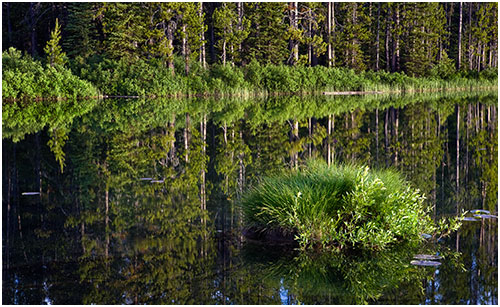
Reflections, Martin Lake
Every year I give a reflections assignment to my photography class, so on a camping trip with 2 of my boys I decided to shoot the assignment myself. One morning I walked down to the lake at sunrise and found the water so smooth I could hardly tell the reflection from the actual trees. I don’t see that very often around here where the wind seems to always blow.I watched the shoreline as I walked and found this one round clump of grass a short way out. It was perfect to break up the composition wherein all of the lines were leading away. It became the “resting place” for my eyes. This resting place is so important in the composition of a photograph. Without a place for the eye to pause, an image like this would be busy and uninteresting, very hard to look at. With this clump of grass, my eye follows the line back into the image, almost out of the frame and then is pulled back in. It creates a circular motion with a pause. Thoughtful composition is just one of many things that can help improve your photographs.
To check out our gallery, click here.
by tmoffett | Jun 1, 2010 | Color, Composition, Landscape, Photographic Philosophy
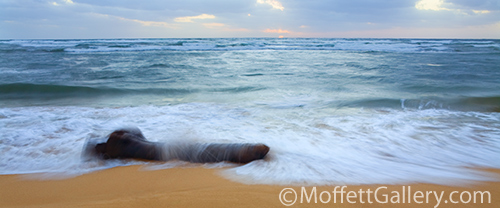
Washed Ashore
This is probably my favorite image that I made on my anniversary trip to Hawaii in January. We were walking along the beach at sunrise and came across this log that had washed ashore and was being beaten down my the waves. It was amazing how a little water could move this big log so violently. I watched and photographed for quite some time… must have shot 20-30 images, all different angles and directions. I loved the motion of the log as the waves slapped up against it. Every shot was different. In this one, the water is wrapping around the log as more water flows over the top, and the rocking of the log is not so violent as in some of the others. The softness takes on a painterly kind of look that is interesting and soothing to me. Again, it is back to my belief that successful photographs are about feeling, and this image has that, at least for me it does. I feet fortunate to have been in the right place at the right time to make this image.
To view more images by Terrell, click here.
by tmoffett | May 30, 2010 | Architecture, Black and White, Composition, Photo tips
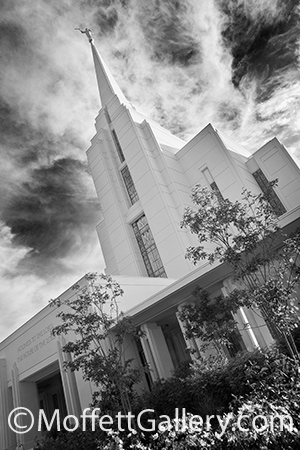
Rexburg Temple
On a trip to Eastern Idaho, I stopped in Rexburg tor a visit some friends, who ended up not being at home. this turned out to be a good thing, as I had a chance to photograph in an area I had not had the chance before. The whole story I mentioned in an earlier post that you can find here. This image is the one I was capturing when I noticed the clouds moving in the other direction.
When shooting architecture, I always look for interesting angles. In this case, I had shot the standard “whole building” shot, and wasn’t at all happy. It looked like something anyone could and would do. I started looking at what made this temple different. It is narrower and taller than most, so I tried to emphasize those characteristics. I came in close, selected a wide angle lens, made sure to compose with the foliage in the foreground to act as a natural frame and then waited for the clouds to move to a desirable location. The resulting image is both pleasing and different. I then turned and headed across the street to photograph the clouds rolling in.
More images can be seen at MoffettGallery.com.
by tmoffett | May 17, 2010 | Black and White, Composition, Landscape, Photo tips
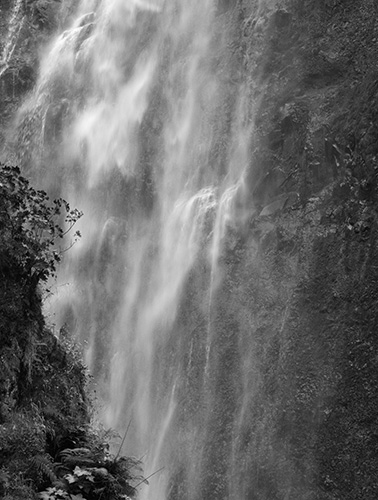
Multnomah Falls
The other day I was showing my students a Dewitt Jones video on creativity. He talked about shooting Yosemite Falls, and it brought back memories of when I was at Multnomah Falls in Oregon. I started by shooting the entire falls, very postcardish. Interesting, but not very creative. I felt like it was nothing special. Anybody could do that. So I started looking for what was really interesting, as Dewitt Jones would say, “another right answer.” I found just a small section of the whole image that to me made a much bigger statement. The sharp, crisp foreground placed against the flowing water of the upper falls was wonderful! It had depth. It had mood. It had feeling. It was different.
by tmoffett | May 10, 2010 | Color, Composition, Critique, Photo tips, Photographic Philosophy
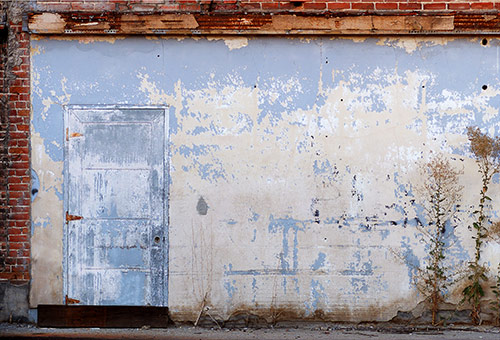
Rusted Hinges
I asked a class of beginning photography students today if they had done any shooting over the weekend, and I had a student reply with, “No, I don’t drive so I couldn’t go anywhere to photograph.” It brought back the memory of when I was in school and having Ruth Bernhard visit and do critiques for several of us students. She questioned, “How far did you travel to make this image.” Her point being that you don’t have to go any farther than your own backyard to find images to photograph. Be observant. Learn to really see the world.
Rusted Hinges is an image that I created without traveling. In fact, I had seen this hundreds of times before really seeing it. This scene is just outside the back door of my former studio space. I saw it every morning and evening as I came and went for nearly 10 years. One evening as I was leaving, the light just happen to be falling on the side of the building in such a way as to capture my attention. I returned to the studio to get a camera and this is what I came up with.
Look at the door. The texture of the peeling paint on the wall. The way the brick and the weeds frame the wall and door is interesting to me. But through everything that is going on in this image, the hinges, the rusty hinges of the door are what really interest me. I see decay, urban decay. This images speaks of the issues facing historic downtown areas that used to be thriving with the bustle of business, but now sit vacant and in disrepair.
The elements of this image all came together in a successful manner not because of my great photographic skills and talents, but more so because I have trained my eye to see and recognize when the elements are there. Acting upon that instinct I was able to create an image that still remains one of my favorites.

Recent Comments