by tmoffett | Jul 31, 2010 | Color, Landscape, Photographic Philosophy, Uncategorized
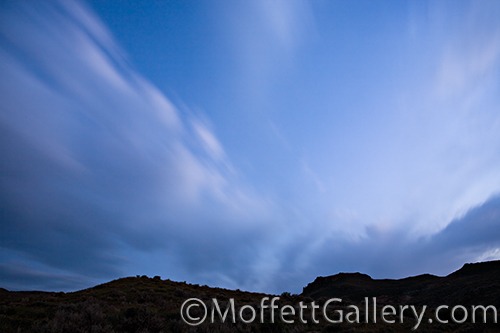
Midnight Sky
I know I have mentioned this before, but so many times we put our cameras away too early in the evening. I am amazed at how interesting images can made long after the sun has set. I love the quality of light just after sunset, but will often continue to explore with my camera deep into the night.
This image was made late one night while on a camping trip with one of my sons boy scout troop. We had eaten a late dinner and the boys were playing some games and so I decided to wander off to photograph. The sun had long since descended below the horizon and the moon was hidden behind some thick clouds in the eastern sky. I focused my camera on the southern horizon and watched the clouds as they moved in. A long exposure (30 seconds) was needed to brighten the sky, yet the mountains still remained nearly silhouetted. There is just a touch of detail in the final print, although it doesn’t show up well in this low res file. The movement of the clouds, to me is very intriguing. The light enhances the feel, as it almost appears to be lit from within. There is a glow, or a luminescence within the image creating a magical feeling. Something very difficult to re-create during the daytime hours.
Being out in the wilderness in the crisp night air, listening to the coyotes howl and making photographs, what else could more refreshing? Shooting at night can be a creatively enhancing experience. It certainly was for me this night.
by tmoffett | Jul 30, 2010 | Color, Ramblings, Random images
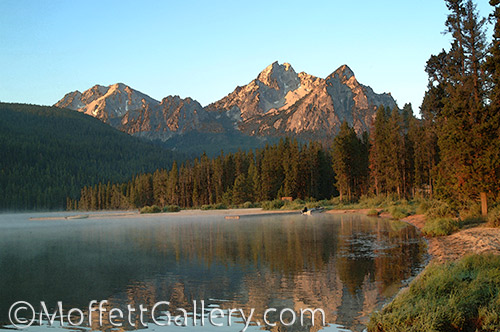
McGowan Peak, Stanley Lake
I pulled this one out of the archives just to take another look. Awhile back I was experimenting with some watercolor effects on my images. This is the only one that I thought was even close to successful. Would love to hear some comments. I live for feedback. What is good? What don’t you like? How would you improve the image? Everyone can give input. I have never met a person that I could not learn something from.
After experimenting for a while, I decided it best to leave the painting to the painters and for me to stick to photography.
by tmoffett | Jul 29, 2010 | Color, Composition, Landscape
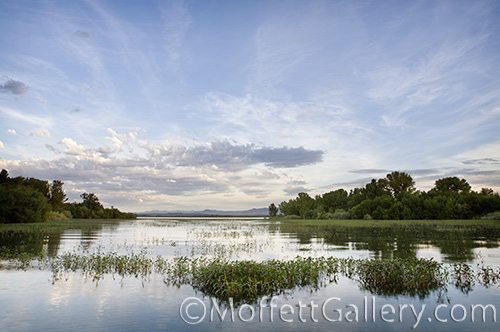
Reflections
The illusion of three dimensionality in a photograph can be powerful. It pulls the viewer into the image and lets him/her roam around. You feel as though you are there, the scene unfolding right before your eyes. Lack of the illusion of depth and all you have is a piece of paper. Not too exciting to look at.
One effective method of creating depth in a landscape photograph is by using the concept of perspective, making sure that there are foreground, mid-ground and background elements in the image. These elements, when working together will capture your attention and then draw you in, allowing you to explore the scene as if you were really there. When I see an image with good use of perspective, creating depth, I often find myself wanting to examine every square millimeter of the photograph. It makes me feel as though I were there, and creating feeling is what photography is all about, at least for me.
by tmoffett | Jul 28, 2010 | Color, Landscape, Photographic Philosophy
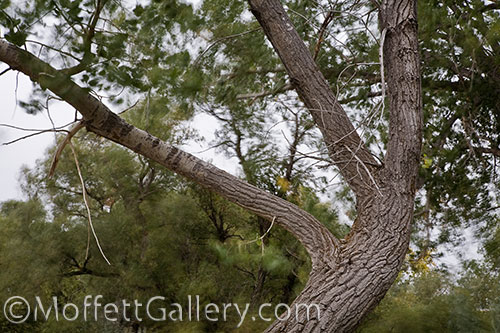
Wind Blown
With portraits, I hated windy days. I didn’t mind the rain, but wind made life very difficult to work with. In my landscape work, however, I have been shooting in the wind quite a bit. I have been intrigued with motion for some time now. A windy day is now perfect!
Using a tripod, I can capture objects that are firm and strong, and they remain still and sharp, while smaller objects, like leaves on a tree, or plants, flowers and grasses blur from their motion. It can create very interesting images. The movement and flow helps to create mood, feeling and meaning, the very need for successful images.
by tmoffett | Jul 27, 2010 | Color, Composition, Landscape, Photographic Philosophy
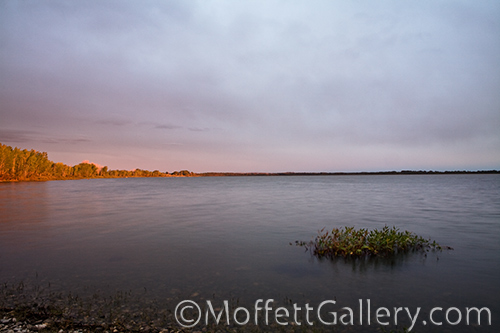
Silence
A photograph that has no emotional impact is just a pretty picture. I have made a lot of pretty pictures in my life, but I hope that I have also created my share of meaningful images. I love photography. I love nature. Photographing is what I have always done and I will continue to do throughout my life. I got my first camera when I was about 8 years old and the journey began. At that time I made a lot of snapshots. I was documenting my life. My vision has changed and now I shoot to create images of what I feel. I search for meaning in my images. I often find myself in my photographs. Not physically, but emotionally.
This particular image makes me feel something. It has a darker tonal range, yet the sky maintains some bright tones and has a sense of mystic about it. The dominance of cool colors and a few warm reflections from the setting sun scattered throughout. A world turned upside down with a few feelings of hope scattered about. It is about searching, reaching for something better, improving oneself, progressing. The composition supports this train of thought as you move from the rocks on the shore to the plants in the water to the trees reflecting the light from the setting sun and then progressing into the eeriness of the stormy sky.
I don’t often talk about what my images say or mean to me, as I like to let the viewer decide for themselves what the meaning is. Know this, though, that I am always photographing from the heart. I am passionate about what I do. I lose myself while photographing and often do not see the meaning right away. It is after the image is completed and I look into it and find myself, my thoughts and feelings, speaking quietly to my heart. This is how I work. This is me.
by tmoffett | Jul 26, 2010 | Color, Landscape, Photo tips
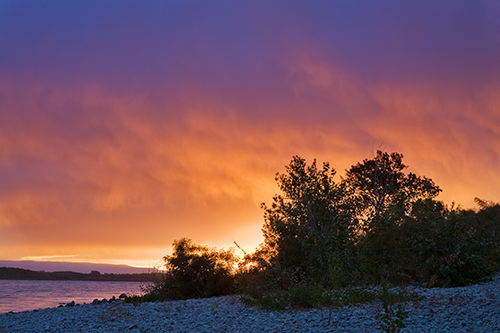
Sunset, Gotts Point
We have had some great sunsets lately, and I love being out at the lake when they happen. No matter how many sunsets I photograph, or see for that matter, I am always wanting to see more. Each one is different and unique. Photographing the sunset to capture its beauty and intensity can be somewhat difficult as well. There are a few things we can do to enhance our vision and capture an image that is more than just another sunset.
First, I want to make sure that I know what the main subject is. Is it the sunset or is it something else with the sunset as the backdrop? Nearly always I will have some other element in the image, but most of the time it is secondary to the sunset, however it is just as important as the sunset. Placement of the foreground elements must be carefully selected.
Second, shoot when the balance of light between foreground and background is ideal. Do you want a complete silhouette or do you want to see detail and color in the foreground elements? In the image above, I wanted to see detail, so I waited until the light on the rocks and trees were about 1.5-2 stops darker than the sunset, and then I made the photograph. Had I waited another 5 minutes, then the trees and rocks would have been completely black. There is very little time to work if you are looking at this kind of balance. You must be set up before the light gets where you want it. A spot meter helps in determining the light ratio and know when to shoot.
Third, use a tripod and cable release. This can not be emphasized enough. I am a firm believer in tripod use. I lock the camera mirror up and use a cable release nearly all of the time. It makes for sharper images. It forces me to slow down and think. I like to make every shot count. Editing is easier this way. I have fewer photographs, but am able to print a very high percentage of what I shoot. I like it that way.
Using these techniques will allow you to do almost everything in camera. You will have very little editing and Photoshop work to do on the image after importing to the computer. This saves a tremendous amount of time and energy as well increases final image quality.

Recent Comments