by tmoffett | Sep 21, 2010 | Color, Landscape, Ramblings
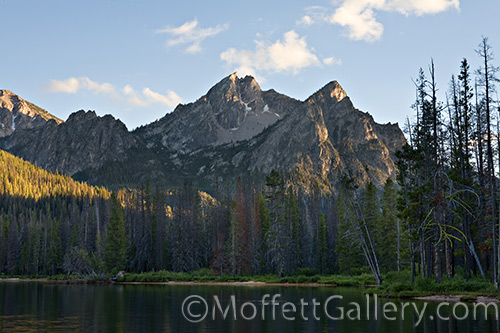
McGowan Peak
This view of McGowan Peak is taken from one of my favorite places on earth, Stanley Lake. It is a beautiful, quiet lake nestled in the Sawtooth Mountains. The cool, crisp mornings in the summertime are refreshing. When it heats up in the valley, Stanley is the place to go! The fishing is good and the photography opportunities are endless.
Some of my other favorite place that I have been, and not necessarily in this order are:
1. Kauai
2. Yachats, Oregon
3. Calf Creek Falls near Escalante, Utah
4. Cannon Beach, Oregon
5. Jackson Hole, Wyoming
Some of the places I hope to visit and photograph someday:
1. Alaska
2. China
3. Maine
4. Australia
5. Italy
I enjoy photographing my local area. I feel that I get to know it and can put more feeling and passion into it, but if the opportunity comes up to go to one of the above mentioned places, I am there!
by tmoffett | Sep 19, 2010 | Color, Composition, Landscape, Photo tips
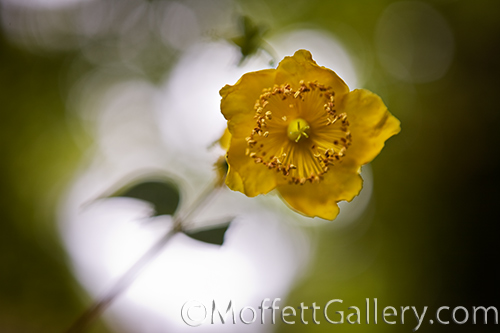
Framed by the light
When it comes to photographic composition, there is no rule greater than the Rule of Thirds. This rule of composition is not new. It stems from the Fibonacci Theory, also known as the Golden Mean, the Golden Ratio or the Fibonacci Spiral. It is a pattern in nature in which a spiral galaxy is laid out, the arc a hawk takes when diving at its prey and even a sunflower seed follows this patten when it grows. It is a pattern that we see everyday in nature, therefore it only makes sense that because we subconsciously are aware of it, our photographic compositions will be stronger if we apply this theory to them.
In a nutshell, the Rule of Thirds is a lazy mans Fibonacci Curve. It is not exact, but close. I think if we are aware of this theory and then compose our images from the heart, not from a grid, more often than not the image will line up with the Fibonacci curve. What the rule of thirds states is that if we divide the frame into thirds, both horizontally and vertically, the intersecting points are the strongest points in the composition. Our subject should then be placed at on of those points. The following is an illustration of the Rule of Thirds.
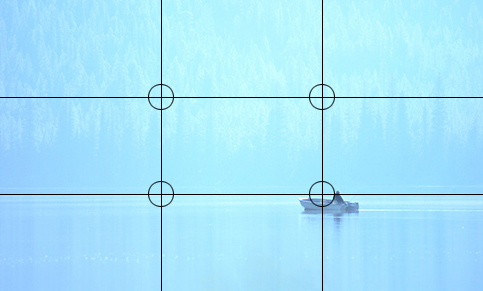
The intersecting points onthe grid are the strongest points to place the main subject.
This is the first theory that I discuss with my classes in their composition unit, as it can be applied to almost any photographic situation. This is the rule that we build on to make even better photographs throughout the year. As we apply line, framing and other compositional rules and concepts of design in our photography, we can still use the rule of thirds along with them to make our photographs even stronger.
by tmoffett | Sep 17, 2010 | Color, Landscape, Photo tips
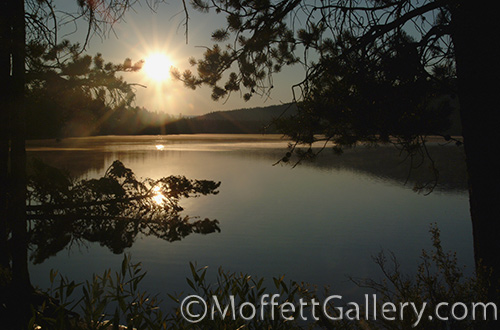
Stanley Lake Sunrise
I have been told numerous times that you can’t shoot into the sun. I remember many a time at a wedding that someone would approach me while I am photographing the bride and groom and mention that the sun is at their backs. “Your pictures won’t turn out,” they say. Annoying. Yes. But I would always just respond with, “Trust me. They are doing just fine!” Then when they see the results they are amazed.
I love landscape photographs with a monochromatic color scheme, and backlighting is one way to achieve that, as you can see from this image. I like to get up before sunrise and shoot the first hour of light. With the low sun, I can get lots of images with this wonderful light quality. It is dramatic and moody, yet still low enough contrast to maintain detail where I want it. this is something that is not possible at mid-day. Early morning and late evening. The perfect light.
by tmoffett | Sep 16, 2010 | Color, Landscape, Photographic Philosophy, Ramblings, Uncategorized
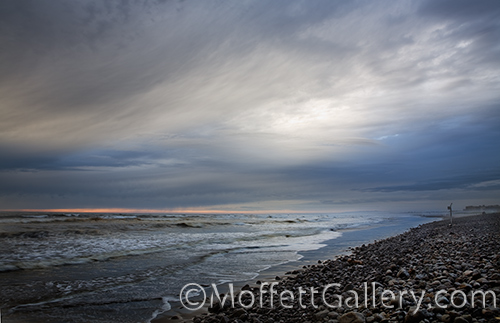
Rocky Shoreline, Seaside, Oregon
Have you ever had one of those days that got off to a rocky start and went downhill from there? I know I have. We all do. How we handle those days can make all the difference.
I asked my students the other day to write about what motivates them to do the things that need to be done but they don’t like doing. We all have things that are motivators. Recognizing what they are is the first step in being able to really utilize them for our benefit. I know for me, if something just isn’t going right, if I read personal testimonial statements from my clients. To see how happy they are with their investment always seems to pick me up and get me going again.
I think that it is all about attitude, our attitude, that can help get us through the tough times. As Dewitt Jones says, “Celebrate what’s right with the world instead of wallowing in what’s wrong.” By looking on the bright side, we can overcome most anything and end up better off because of it. This relates to both life and photography. Many times I have been out photographing and I just wasn’t seeing anything. I made excuses, “The light’s not right, The scene is boring, If there was only a tree right there, etc.” When I find myself in that situation, if I catch myself making excuses, then I try to sit down, take a deep breath and change my attitude. When I do, I often go back out and find something wonderful to photograph.
I remember a trip to Oregon just over a year ago. We arrived on the coast and were met with fog. Dense fog. the light was flat. Everything was gray. It wasn’t what I was expecting. I was disappointed. After the first day, I realized, “I am going to be here for a week. Don’t waste it. Find the beauty in the fog!” So I did. We had a wonderful time and I came home with some amazing images. Not what I had expected to shoot, but great images nonetheless.
Success is all in your attitude!
by tmoffett | Sep 14, 2010 | Color, Photographic Philosophy, Random images
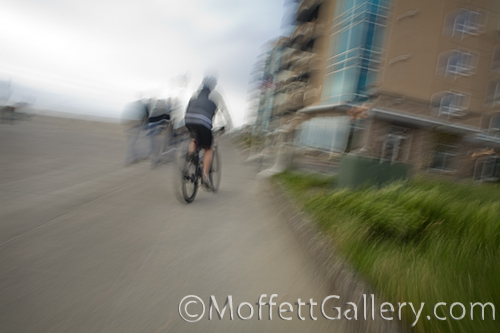
Strolling the Promenade, Seaside, Oregon
Taking time to explore new possibilities in our photography is an essential element in keeping fresh. It is so easy to get stale and bored, even with our own work, if we never shake it up a bit. It really doesn’t take much time to explore, but the benefits are tremendous to our creativity.
On a recent trip to Seaside, Oregon, Christeena and I went for a stroll on the Promenade. It was a cool evening with threatening storm, but even with that it was a wonderful evening. As we walked, I began photographing. No tripod, not even stopping to set up. Just walking and shooting. Very much not the norm for me. I usually am all about setting up on a tripod and picking apart the composition before pressing the shutter. I use a spot meter to make sure that the exposure is perfect. This was so different, yet quite refreshing. I set my camera to a long shutter speed, put the camera up to my eye and started walking. The camera shake was unpredictable but inspiring. The motion in the image creates a feeling of speed, the tilt of the lens indicates motion. It is wonderful.
No, I haven’t changed my style. What this experience did do, though, was refresh my mind and get me ready for a few days of my style of photography. It has also got me to thinking about how many possibilities there are to pursuing creativity in out photography. So let yourself go. try something new. You just may find that you like it!
by tmoffett | Sep 13, 2010 | Color, Composition, Landscape
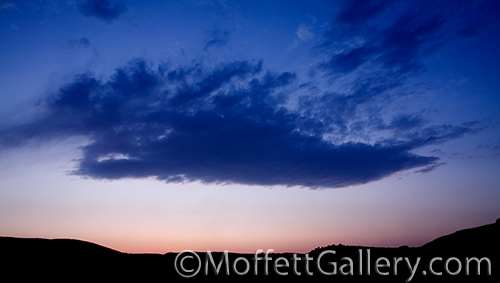
Sunset in the Owyhees
The last light of the evening is always my favorite. The light gets real moody and creates an almost surreal feeling in the images. The contrast is low, so detail is maintained in both shadows and highlights unlike anything that can be created during an earlier time of day. Colors also become saturated. I love how with careful attention to exposure I am left with little work to be done in Photoshop. The in camera image is nearly perfect.
Next to lighting and exposure, composition decisions are critical. Note how the cloud in this image mimics the shape of the mountain tops along the horizon. Cropping is done in camera to make sure that the horizon line does not split the composition in half. I really like moving the horizon down near the bottom, allowing for more sky and the drama of the sunset to become dominant. In this photograph, the warm color in the middle, sandwiched by the cool blues on top and bottom are what make the color scheme work. Dark tones, rich in detail fill the shadows and holding my attention as I search them for answers. Answers to what, I am not sure, but I keep looking none the less. It’s all a mystery.

Recent Comments