by tmoffett | Jan 18, 2011 | Black and White, Photo tips, Ramblings
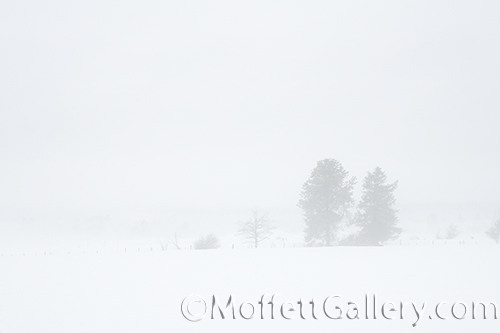
Stormy Afternoon, McCall, Idaho
I spent the extended weekend with Christeena in McCall celebrating our 21st anniversary. This was a much needed getaway! Stress had crept into our lives and getting away from it all for a few days always seems to do the trick to help us return to a more normal life. We had a wonderful time just relaxing, driving and photographing. We had stormy weather nearly the entire time, but that has never hampered my ability to have fun and make new photographs. After attending church on Sunday, we went for a drive to check out the scenery. We headed out in a direction we had never been and were not disappointed. It was raining a bit, and then the fog rolled in. It really was beautiful. I love the fog, at least photographing in it. Driving in it is a different story. I don’t get the opportunity to photograph foggy scenes very often, so I happily took advantage of this moment.
When photographing in the fog, proper exposure is critical. If you don’t adjust your exposure settings, then your image will end up dark and muddy looking. I like the light, airy feeling of the fog, so I shift my exposure a full 2 stops. This will push the image to the light side, but should not over-expose anything. Learning to use the exposure compensation settings on your camera will make making these corrections simple.
by tmoffett | Jan 10, 2011 | Color, Landscape
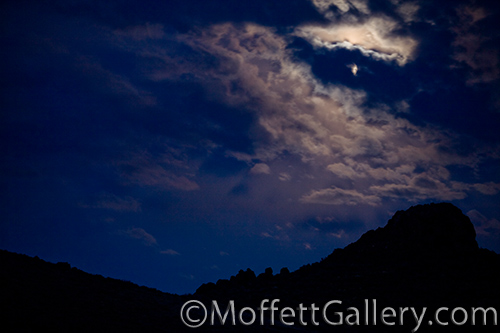
Owyhees with a Full Moon
I love being in the outdoors. A fall night found me out with one of my boys on a scouting trip in the Owyhees when the clouds rolled in and the light from the full moon illuminated them in a mysterious way. I was in awe as I watched the constant change as the clouds moved and covered the moon, then later the sky would open back up and be full of light. I took several exposures of the night sky, some with a silhouetted foreground and others without. This image, to me really shows the feeling of the night. The deep blues and partial cloud cover exudes a feeling of wonder, quite moody. It is what I look for, images that evoke feeling. The subject matter really doesn’t matter if the light is right.
by tmoffett | Jan 6, 2011 | Color, Photographic Philosophy
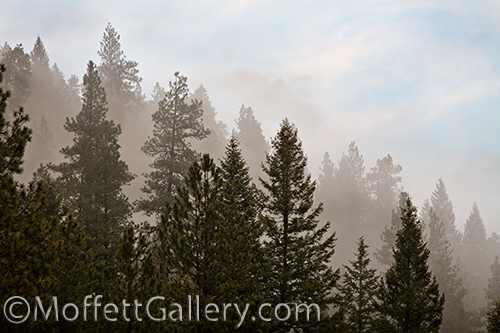
Low Lying Clouds
What is style? In a nutshell, it is you! It is how you see. It is what you are about.
Developing a personal style is a must for successful photographers. It is something that takes time. It will develop when we don’t think about it. Think about it too much and you may hinder its development. There are some things, however that will help in developing your style. The first is to make photographs! Lots of them. Look at and critique your work. Then study other photographers and artists. Look at a lot of images. Shoot some more and critique more. Show other artists your work and discuss it with them. All of this will help, but you must give it time. Possibly years.
I remember the first time I realized that I was developing a style. I had printed a set of work for a gallery showing, and upon completion, I delivered the work to the gallery and as I laid it out and looked at it as a whole, I was taken aback. I could see myself in the images. It was wonderful and scary at the same time.
I have since paid more attention to my work and noticed a thread of continuity. Even my portraits feel similar to the landscapes. Style is what binds the photographs together. My style is what happens when I photograph by instinct. I see, I feel, I photograph. The photograph is me.
by tmoffett | Jan 5, 2011 | Color, Composition, Photographic Technique
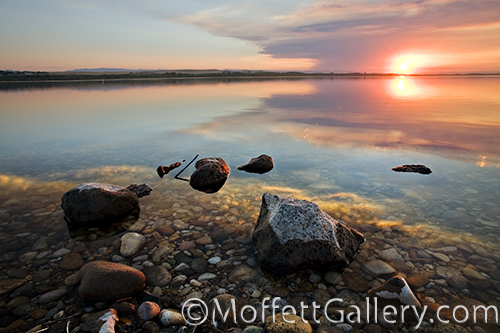
Setting Sun
One of the more difficult things for young, aspiring photographers to learn is how to see light. Light is what photography is all about, yet I find so many young students really believe that it is all about locations and subjects. Without quality light, even the most incredible subjects will become ordinary, however with quality light the ordinary subject becomes extraordinary. With every assignment that I give my students we discuss light. Over time, some finally get it, and when they do the quality and consistency of their photographs drastically improve.
This image, Setting Sun, was made practically in my own backyard. The location is less than 10 miles from home, out at the lake. I have spent many mornings and evenings here photographing. I have also viewed hundreds of photographs taken at this same location that look like mere snapshots. Harsh light, no feeling, no mood, no message. The difference is in the light and being able to capture the light in such a way as to bring out the warmth and subtle color nuances that the golden hour brings.
A good exercise to help one learn to see the light is to photograph the same subject at differing times of the day, from pre-dawn to post sunset, then evaluate the images. You will notice how the intensity, quality and color of light changes throughout the day. Knowing how light changes through the day is critical knowledge for a photographer to have. Once you understand how the light changes on a clear day, watch what it does on cloudy or overcast days. The light truly does create a mood and feeling that can transform the ordinary scene into something magnificent and beautiful.
by tmoffett | Jan 4, 2011 | Color, Composition
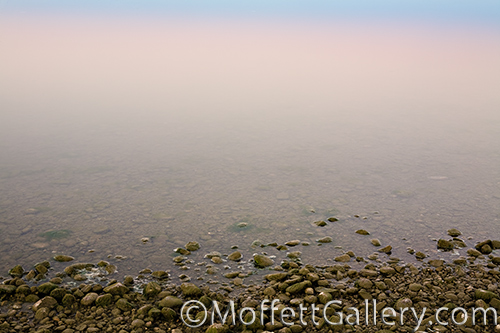
Sunrise Reflection
How often we miss the shot because we are looking for something big and grandiose instead of looking right where we are! I, too, often want to go somewhere else to photograph, but am not always able to get away. I am nearly always amazed at what I find right here in my own backyard. I have been out to the lake many, many times, but always find something new each time. The light is different, the water level changes, weather changes…
This image was made on one such occasion. I needed to get out and photograph, but had very limited time. I awoke early on a cool autumn morning and drove to the lake to watch the sunrise. I was walking the shoreline and I saw the color of the sky shift from blue to pink as the sun neared the horizon. I turned around and looked at the water and saw the reflecting colors on the surface. The image was there, right at my feet. The composition is simple and effective. The strip of blue at the top to bounce my eye back into the frame, the rocks at the bottom to frame the color. The mood and feeling is even better. When looking at a large print I feel calm yet captivated. The rocky lake bottom fades into a smooth gradation of color. What lies below the surface of color? There are questions unanswered. It keeps me coming back for another look.

Recent Comments